Sciatica Is Not a Diagnosis

'Sciatica' describes a pattern of symptoms, not a cause. Until you know what's actually compressing the nerve, you're treating a label, not a problem.
A Symptom, Not a Cause
"You've got sciatica" is one of the most commonly repeated lines in musculoskeletal care, and it tells you almost nothing useful. Sciatica simply describes a pattern, pain, tingling, numbness, or weakness travelling along the path of the sciatic nerve, usually from the lower back or buttock down the back of the leg. It's a description of where symptoms show up, not an explanation of why they're happening.
Being told you have sciatica without any further explanation is a bit like being told you have a headache and sent on your way. Technically accurate, clinically incomplete.
The Usual Suspects
Sciatic nerve irritation can stem from a range of underlying issues, see our complete guide to understanding nerve pain in the lower back and leg.: a disc bulge pressing on a nerve root, spinal stenosis narrowing the space the nerve travels through, piriformis muscle tightness compressing the nerve deep in the buttock, or joint-related inflammation irritating the nerve roots as they exit the spine. Each of these has a genuinely different treatment emphasis, even though they can all produce a very similar symptom pattern down the leg.
Why the Label Alone Isn't Enough Information
Treating 'sciatica' without knowing which of these is actually driving it is treating a shadow rather than the object casting it. A disc-related cause often responds well to decompression-based approaches and specific directional movement. A piriformis-driven case usually needs a completely different emphasis on soft tissue and hip mechanics. Lump them together under one generic label and you risk applying the wrong tool to the wrong problem.
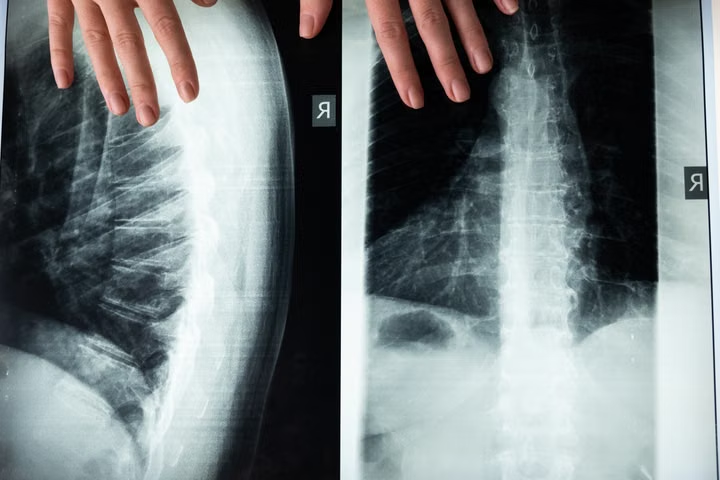
Finding the Actual Source
A proper work-up for sciatic-type symptoms involves orthopedic and neurological testing, imaging alone cannot confirm the source. See our assessment process for how we approach this. designed to localise where along the nerve's pathway the irritation is coming from, checking reflexes, specific muscle strength, sensation patterns. Book an assessment to find the actual cause., and how symptoms respond to particular positions and movements. That's what turns a vague label into an actual, treatable diagnosis, and it's the difference between generic advice and a plan built around what's actually going on in your body. It's this kind of thorough work-up we carry out for every sciatica presentation we see in North Ryde, rather than reaching for a generic label and a generic plan.
Related Reading
← Back to the full Nerve Pain guideFor educational purposes only. Does not supersede advice from your GP or specialist.
Have a question this article didn't cover?
Give us a call, send us an email, or book in for a consultation.